
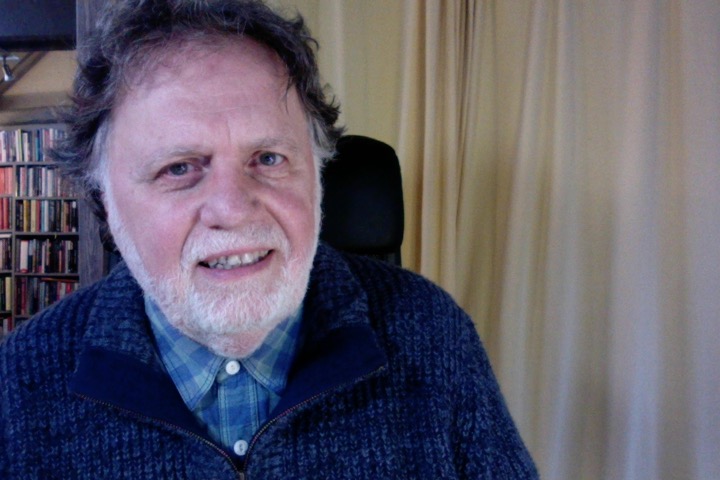
Written in the third person so you can copy and paste if you need to…
The Short Blurb…
After an initial training and career in the theatre (including working in London’s West End and for over four years at the Royal Opera House, Covent Garden) Wayne studied fine art and art history at Camberwell School of Art and Goldsmiths’ College, University of London, where he obtained a first class honours degree. He studied archaeology at Exeter University and has a Master’s degree in Art History from the Open University. For two years he worked for the Contemporary Art Society based at the Tate Gallery and for 23 years was General Manager and Director of Dillington House – Somerset’s Residential College of Adult Education until his retirement in 2015. He now divides his time between his research interests – archaeology, cartography, cultural history, music and art. For many years Wayne was Co-Director of the Dillington Summer School and continues to originate and tutor courses for various colleges. He is a Fellow of the Royal Society of Arts.
The Really Long Blurb – still in the third person but not for publication!
Born and raised in North Wales, Wayne trained as a stage manager and lighting designer at the London Academy of Dramatic Art (LAMDA) after which he worked at the Royal Court Theatre, Greenwich Theatre and the West End, most notably on Alan Ayckbourn’s The Norman Conquests with Tom Courtenay, Michael Gambon, Penelope Keith, Felicity Kendall and Penelope Wilton (with apologies for name-dropping). After this he moved to the Royal Opera at Covent Garden where he worked with some of the greatest singers of the 20th century including Birgit Nilsson, Joan Sutherland, Janet Baker, Gwyneth Jones and the so-called Three Tenors (more apologies for name-dropping). Wanting to develop his own artistic talent he then went to study art and art history, first at Camberwell School of Art and then Goldsmiths’ College, University of London, where he obtained a first class honours degree. This was followed by a year as President of the Students’ Union during which he also worked for the Inner London Probation Service as a Security Officer in bail hostels! On leaving Goldsmiths, Wayne worked part-time for the Contemporary Art Society, then based at the Tate Gallery on Millbank, during which he moved to West Dorset. Here he set up Radius Art, a voluntary group that promoted contemporary art through producing an artists’ directory as well as organising various community art projects and exhibitions. The artists’ directory enabled the first Dorset Art Week to be established. He was on the organising committee for this, a role he repeated in the setting up of the first Somerset Art Weeks. Not resting on any laurels, he also established the Abbotsbury Studio with John Skinner and David Hibberd.
The move to Dorset was coincidental with Wayne’s involvement with Nexus Opera that produced a televised fully-staged production of Britten’s Curlew River in Wells Cathedral for the Bath Festival. This was then taken to the Aldeburgh Festival, the BBC Proms in the Albert Hall and presented as the opening event for the Summer Music Society of Dorset (SMSD) season of concerts. Now based in Dorset, Wayne was made a trustee for the SMSD and stage managed and lit the concerts for over 25 years. Winding back a bit to the early years in Dorset, the commute to London was not sustainable (on grounds of time and cost) so was replaced with getting a job as manager of Bridport Leisure Centre (a stunning demonstration of transferable skills!). He also served on the Management Committee for Hooke Park College – an offshoot of John Makepeace’s Parnham College. After five years Wayne left Bridport to take up the position of running Dillington House, Somerset’s Residential College of Adult Education and the Arts. This job brought together Wayne’s organising skills, entrepreneurial and creative flair and his passion for learning and the arts. He became an vocal advocate for adult education and the benefits it brought to individuals and communities. For three years he was Chairman of the now defunct Adult Residential Colleges Association (defunct because councils have closed and sold off their colleges). Wayne led Dillington for 23 years until retiring to concentrate on teaching and personal projects that included doing a Masters degree in Art History with the Open University.
Shortly after arriving at Dillington, Wayne studied Prehistoric Archaeology at Exeter University. This led to him to using his annual leave on fieldwork projects with UCL’s Professor Christopher Tilley in Cornwall, Devon, Dorset, Sweden, Norway, France and Malta. He was part of the Stonehenge Riverside Project led by Mike Parker Pearson and others. This involved surveying over 600 barrow locations across Salisbury Plain and adjacent landscapes. More recently Wayne has worked with Chris again in western Sweden, Minorca and Scotland.
Wayne continues to originate and deliver a range of courses and talks. This is his cover for buying more books on the pretence he has to be up-to-date in everything he does. He is passionate about the Dorset landscape and its historic and prehistoric heritage. He is an enthusiast for all things Spanish – the cities, landscape, the history, music, food and the wine. As a member of the Dorset Wildlife Trust he is a volunteer looking after the reintroduced beavers at a top-secret location. He is a life-member of the Raymond Williams Foundation, a member of the William Blake Society and a member of the Dorset Natural History and Archaeological Society.
Music has played an important part of Wayne’s life, professionally and as an amateur. As a Welshman singing is in his DNA and he’s been associated with a number of choirs over the years. He is regularly invited to review music events across the region and is on the Organising Committee of the prestigious Somerset Song Prize singing competition. As far as the spoken word is concerned, Wayne has adjudicated debating competitions for young people for The English Speaking Union and the Institute of Ideas. Wayne is also an active Fellow of the Royal Society of Arts.