
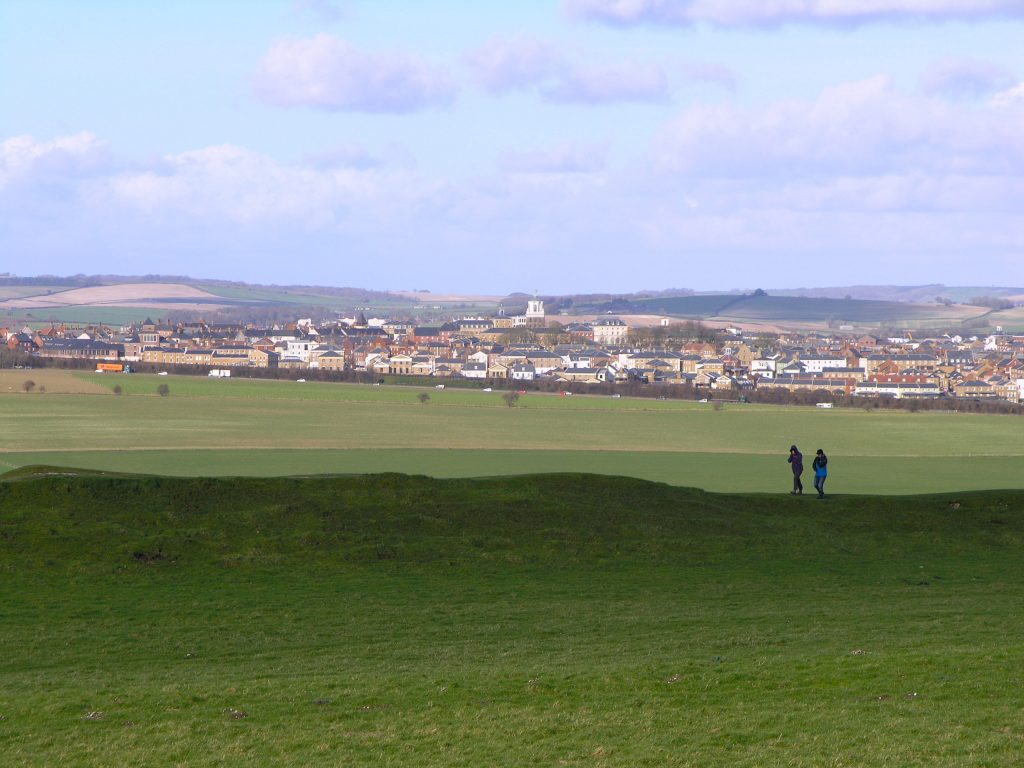
Poundbury
The so-called ‘urban extension’ of Dorchester remains controversial. Some people like it whilst others hate it. I’m perplexed by its intrusion on what is regarded as one of the most important archaeological landscapes in southern England. What were people thinking of when the scheme was approved thirty years ago? The simple answer was that Dorchester needed more housing and this coincided with Prince Charles’s thesis of a more benign form of urban development focusing on more traditional architectural styles. As Duke of Cornwall he owned much of the land surrounding the town and so was in a position to put his ideas into practice. The result is a mishmash of vernacular and neo-classical buildings together with other ideas such as the elimination of ‘street clutter’ – signage and road markings etc. To make sense of this, I am currently researching the history of Poundbury. This involves interviewing residents and non-residents as well as councillors past and present. Poundbury is still under development and, if all goes according to plan, it will be completed in the next three years. I’m in no rush to complete my research nor arrive at snap judgements although I can already see the where I might end up. I hope my work will lead to a lavishly illustrated book that will tell the story of this most divisive developments. If you would like to say what you think please email me.
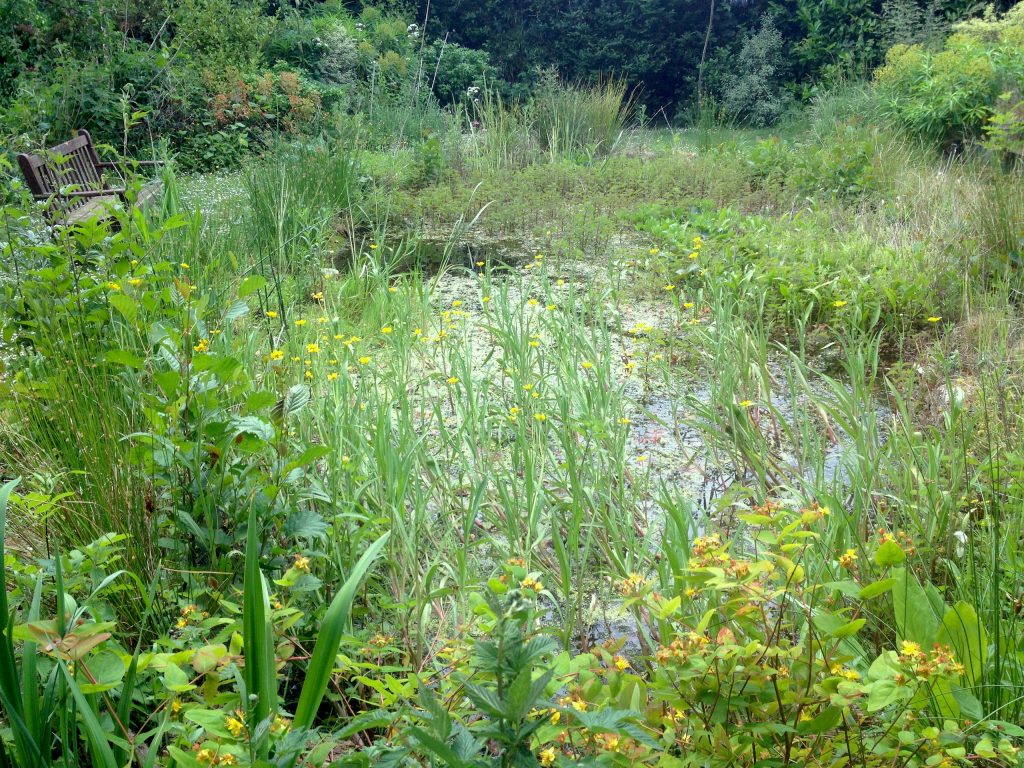
Wild Gardening
My garden is big and unruly. The top is on chalk whilst the bottom is on greensand. Between these underlying strata is a nasty bed of flints. This is overlaid by clay (and flints) making planting a challenge that normally needs the use of a mattock and even a pick-axe. Because of the altitude (650’) there is plenty of wet and the clay means poor drainage. I usually say that if it’s cloudy in Lyme Regis, its chucking it down at home. There’s little topsoil so veg gardening is not practical and in anycase, I want the garden to be a place of relaxation. The conspiracy of natural conditions has led me to an approach of least resistance. Working with the grain, so to speak. I have become a ‘wild gardener’. This outlook involves planting native trees, shrubs and bee and butterfly friendly perennials. A large pond is a focus for all sorts of wildlife activity including a grass snake. The one thug that I try to keep under control is hogweed. The big parsnip-like roots makes it impossible to eradicate so my approach is to try and prevent it setting seed. I fail every year, although I suspect seeds can lay dormant for years before erupting where you least expect it. All in all, the garden is a delight but I only wish I had the time to spend more time keeping things in check. That said, a few hours a week normally has things looking good as well as being pretty good for the wildlife too.